
Ship damage
Surviving a fight does not mean leaving it intact. Damage affects particular sections of your ship, changing both its appearance and what it can still do.

Damage where the shots land
The hull has distinct damage zones, so the point of impact matters. Hits leave scorched plating, dents and holes at their impact points. Repeated fire wears down armour and exposes the structure beneath it. Badly damaged sections can burn, spark and trail smoke. On fighters, destroyed parts can break away; larger hull sections remain gutted and visibly damaged.
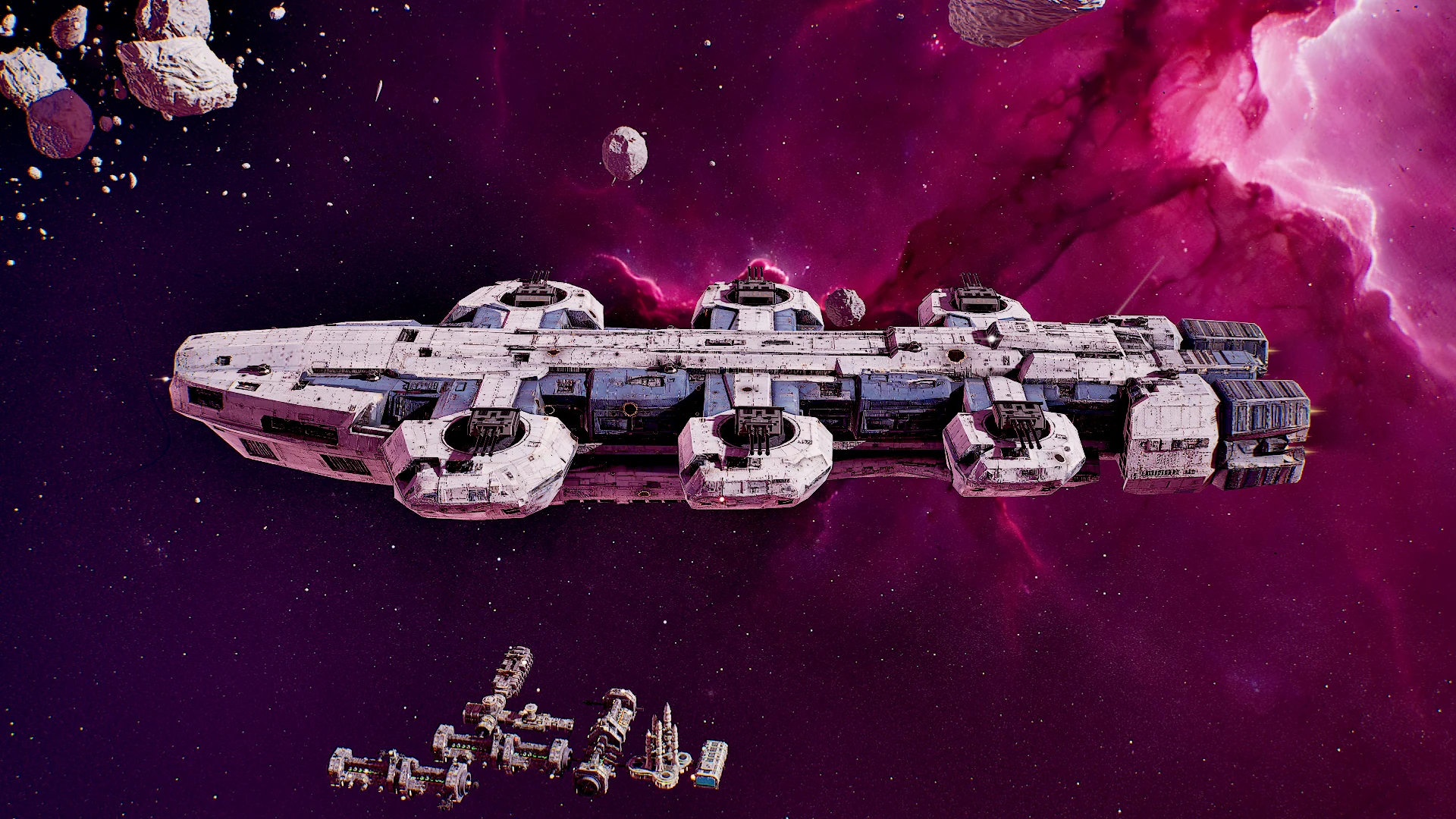
A missing part means missing firepower
The damage model affects more than a single health bar. Weapons belong to the sections carrying them. If a part is torn off, a laser mounted on it cannot keep firing: that weapon stays unavailable until the damaged section is repaired. Losing one side of your armament can change how you approach the rest of the battle.
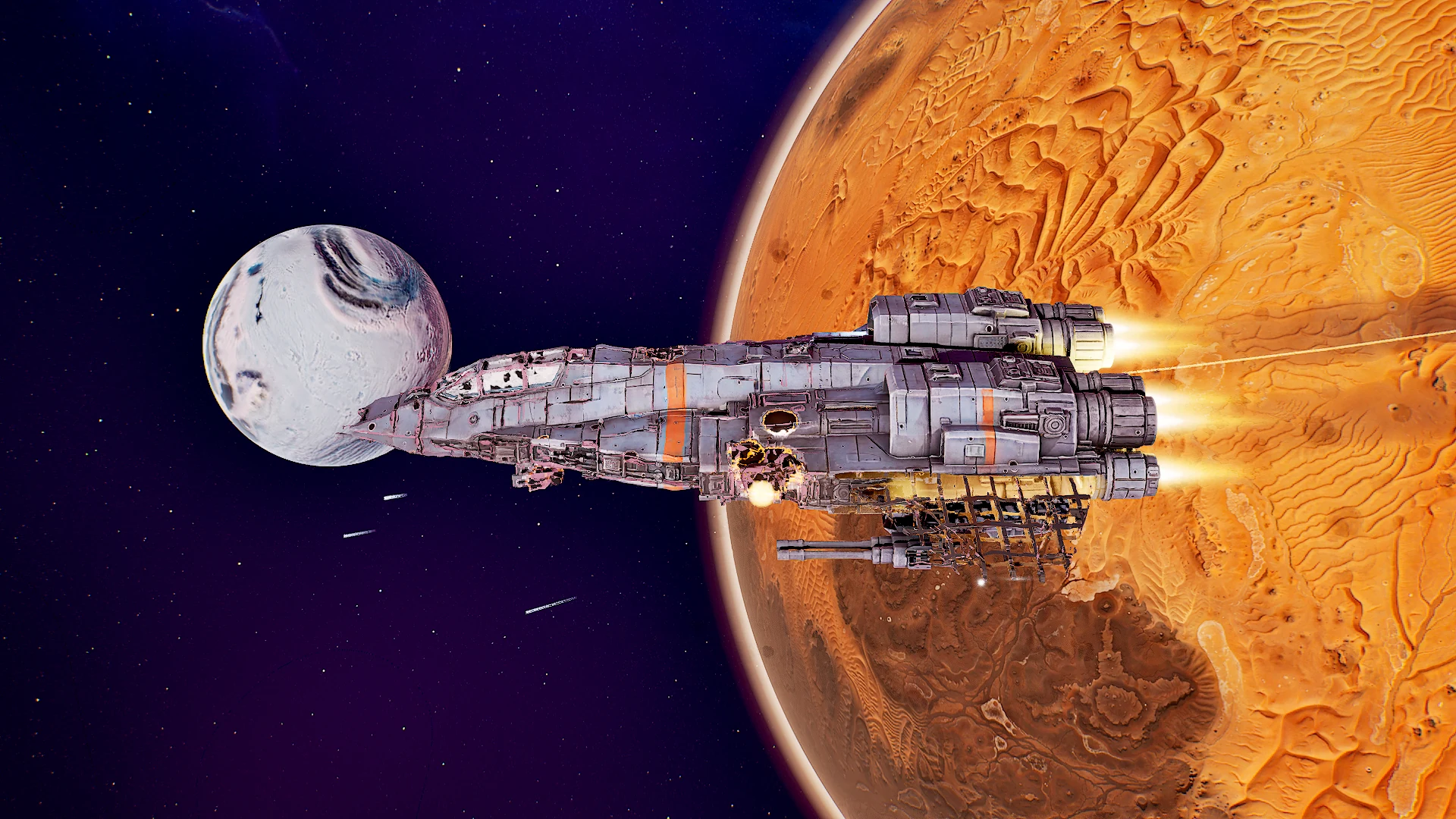
The cockpit can take damage, too
Damage is visible around the cockpit as well. This Reaper shows a shattered nose section and a damaged canopy.

Bring the ship back into service
Assess the damage before your next engagement and arrange repairs. Restoring the ship repairs its affected systems and clears the corresponding damage marks. A battered fighter may still get you home, but continuing to fight with missing weapons is a different proposition from entering combat fully prepared.
Find out more

Ships
From fighters and corvettes to battleships and working vessels, discover a selection of the human fleet in Galaxy Unwritten.
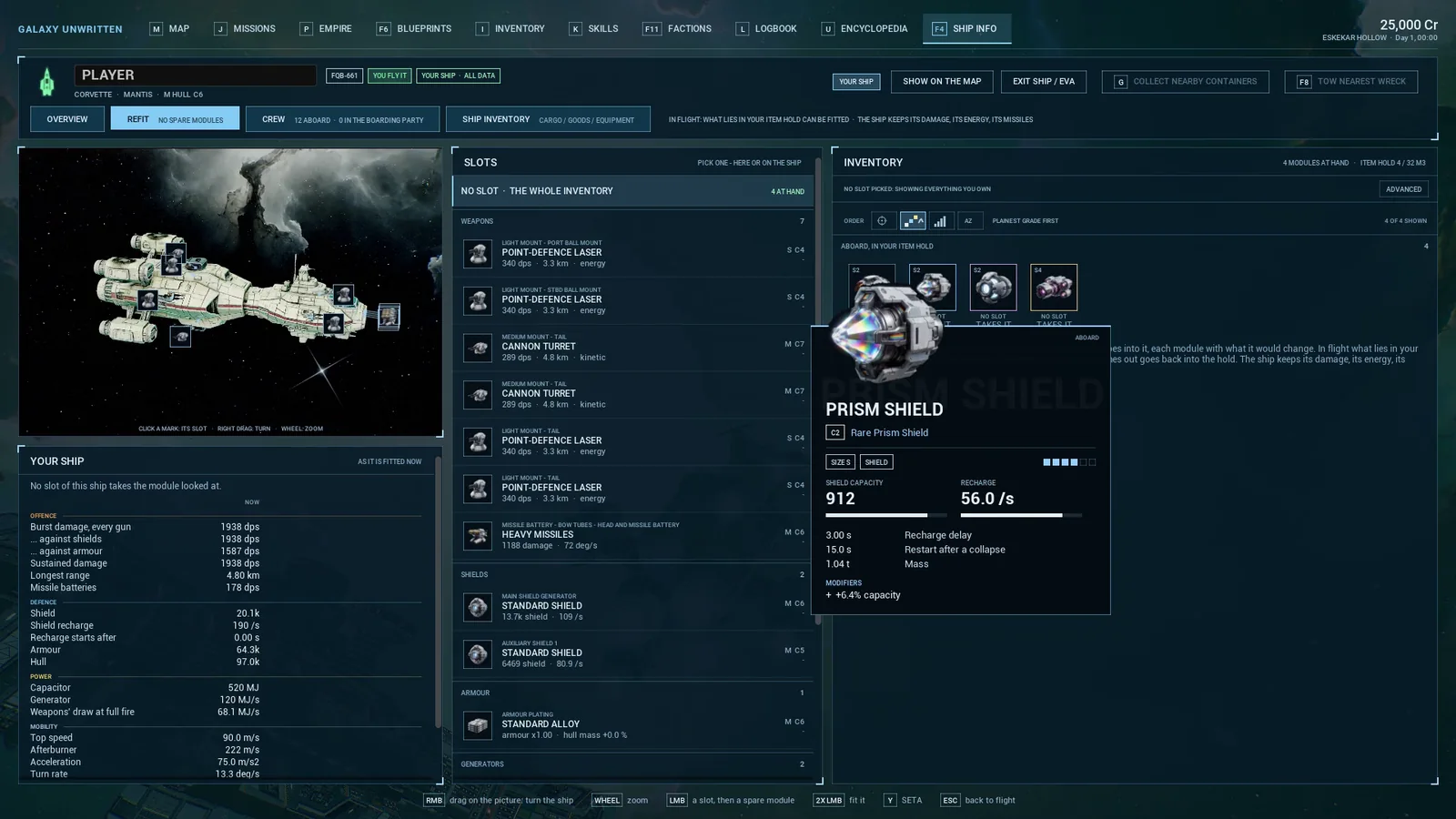
Ship modules
Weapons, shields, armour, power and engines: learn the module types, fitting classes, rarity tiers and ways to acquire better equipment.
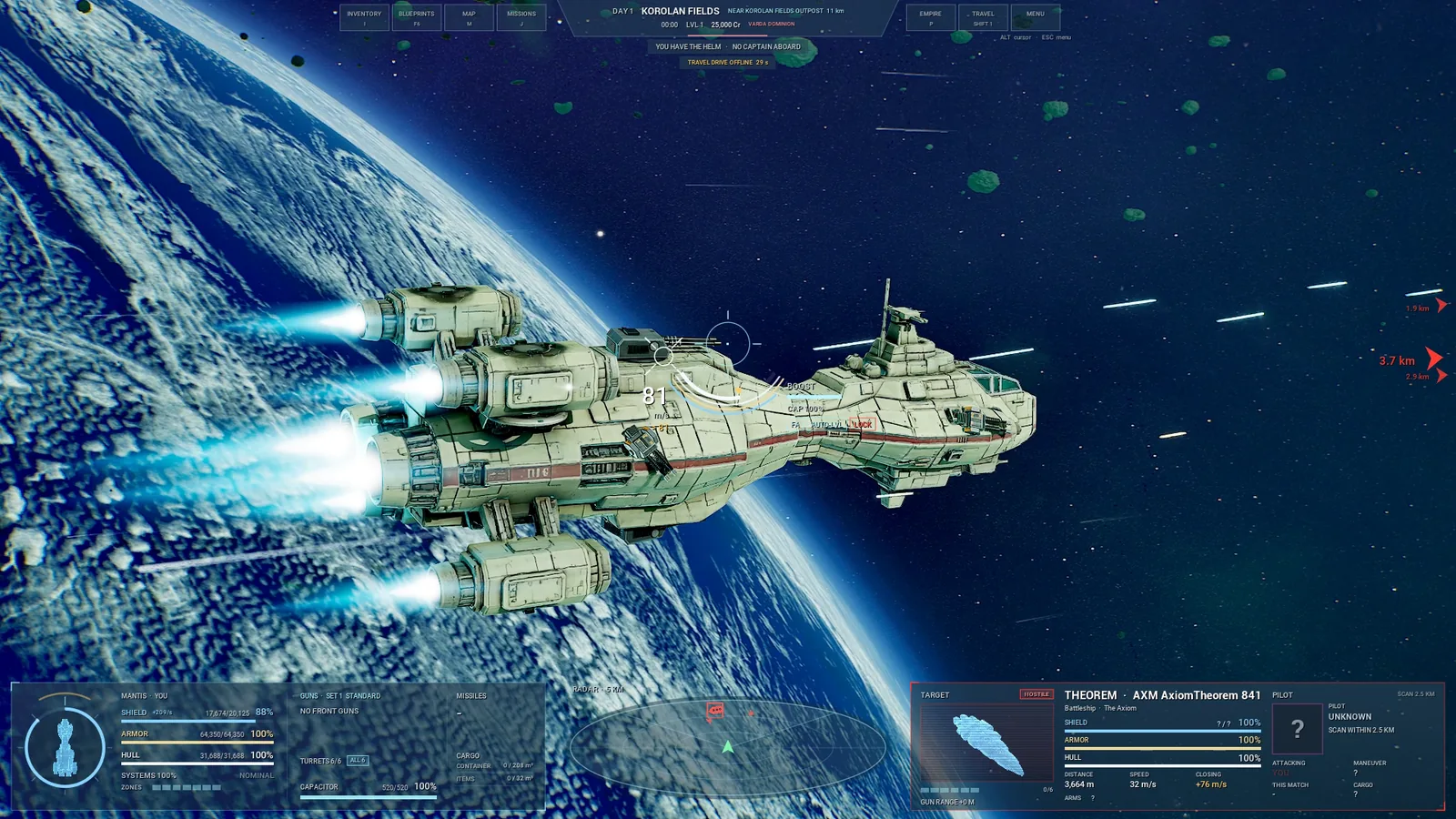
Combat and boarding
Fly fast dogfights, command heavier warships and board enemy ships and bases with a trained and equipped assault force.